
Ama-Dablam Expedition
DELUXE LUXURY PACKAGE
     • Private airport transfers throughout
     • 5-star hotel in Kathmandu on bed and breakfast basis
     • Best available lodge accommodation on the trek with private rooms and attached bathrooms where available
     • All meals during the trek (breakfast, lunch, and dinner)
     • Kathmandu to your trekking start point and aftrer trekking ending point to Kathmandu by helicopter
     • Dedicated private guide (one guide per trekker)
     • Private porter for each trekker
     • National Park entry permit
     • Comprehensive first aid and emergency kit
     • Guide, porter, and staff wages, meals, insurance, and equipment
     • Welcome and farewell dinners at premium restaurant in Kathmandu
     • Duffle bag, downjacket, sleeping bag, trekking poles and trekking map

	Price $18000
STANDARD PACKAGE
    • Airport pickups and drops in  Kathmandu
    • 4-star hotel in Kathmandu on bed and breakfast basis
    • Good standard tea house accommodation with private rooms where available
    • All meals during the trek (breakfast, lunch, and dinner)
    • Domestic flight
    • Senior licensed English-speaking trekking guide
    • Porter service (1 porter for every 2 trekkers)
    • National Park entry permit
    • Comprehensive first aid kit
    • Guide, porter, and staff wages, meals, insurance, and equipment
    • Farewell dinner in Kathmandu
    • Duffle bag, downjacket, sleeping bag, trekking poles and trekking map
		Price $15500
ECONOMY PACKAGE
    • Airport pickups and drops in Kathmandu
    • 3-star hotel in Kathmandu on bed and breakfast basis
    • Basic tea house accommodation on the trek (shared rooms where necessary)
    • All meals during the trek (breakfast, lunch, and dinner)
    • Domestic flight
    • Licensed English-speaking trekking guide
    • Porter service (1 porter for every 2 trekkers)
    • National Park entry permit
    • First aid kit
    • Guide, porter, and staff wages, meals, insurance, and equipment
    • Farewell dinner in Kathmandu
    • Duffle bag and trekking map
		Price $12500
Ama Dablam Expedition
31 Days | Summit Altitude: 6,812 m
Introduction
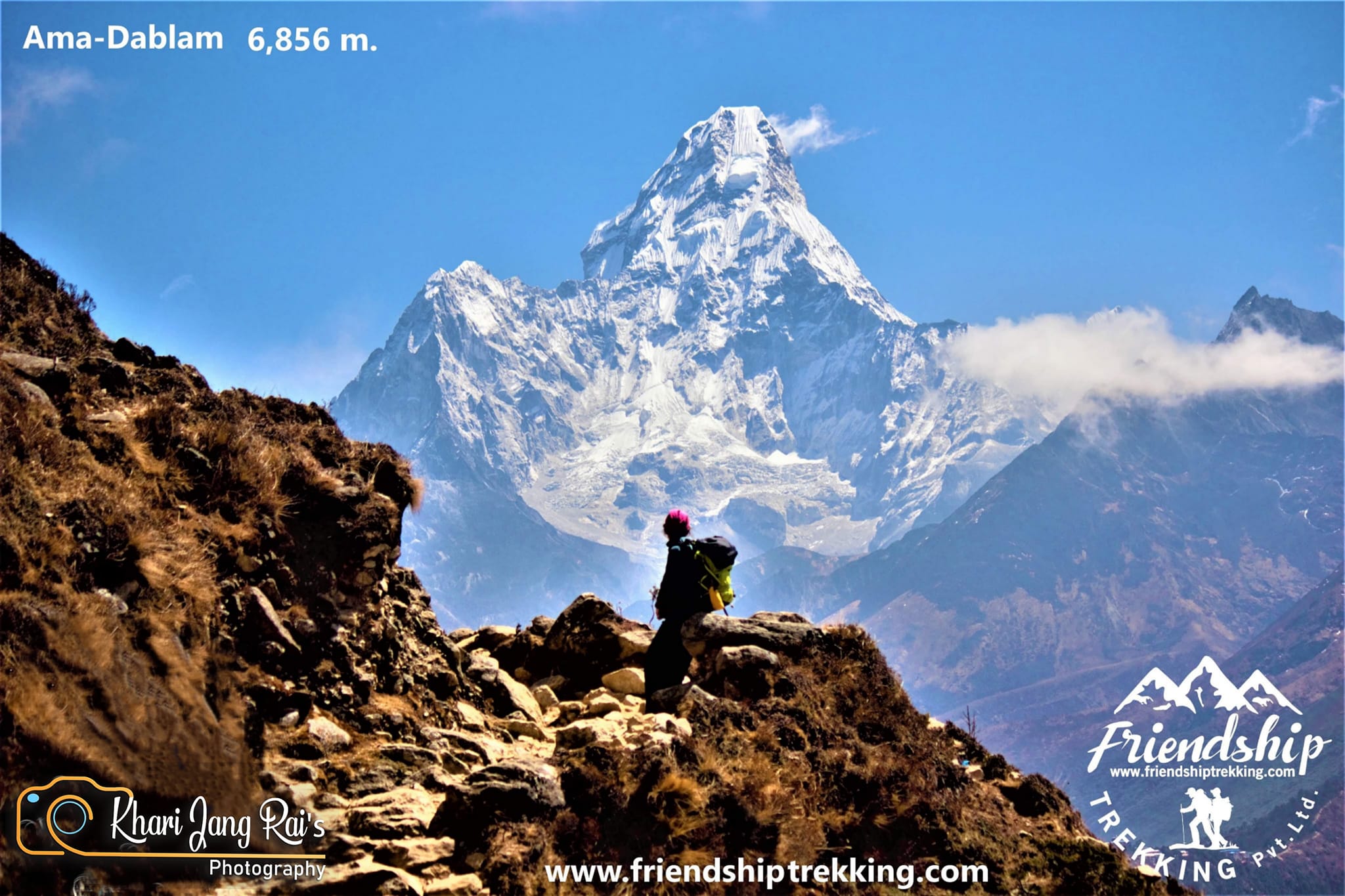
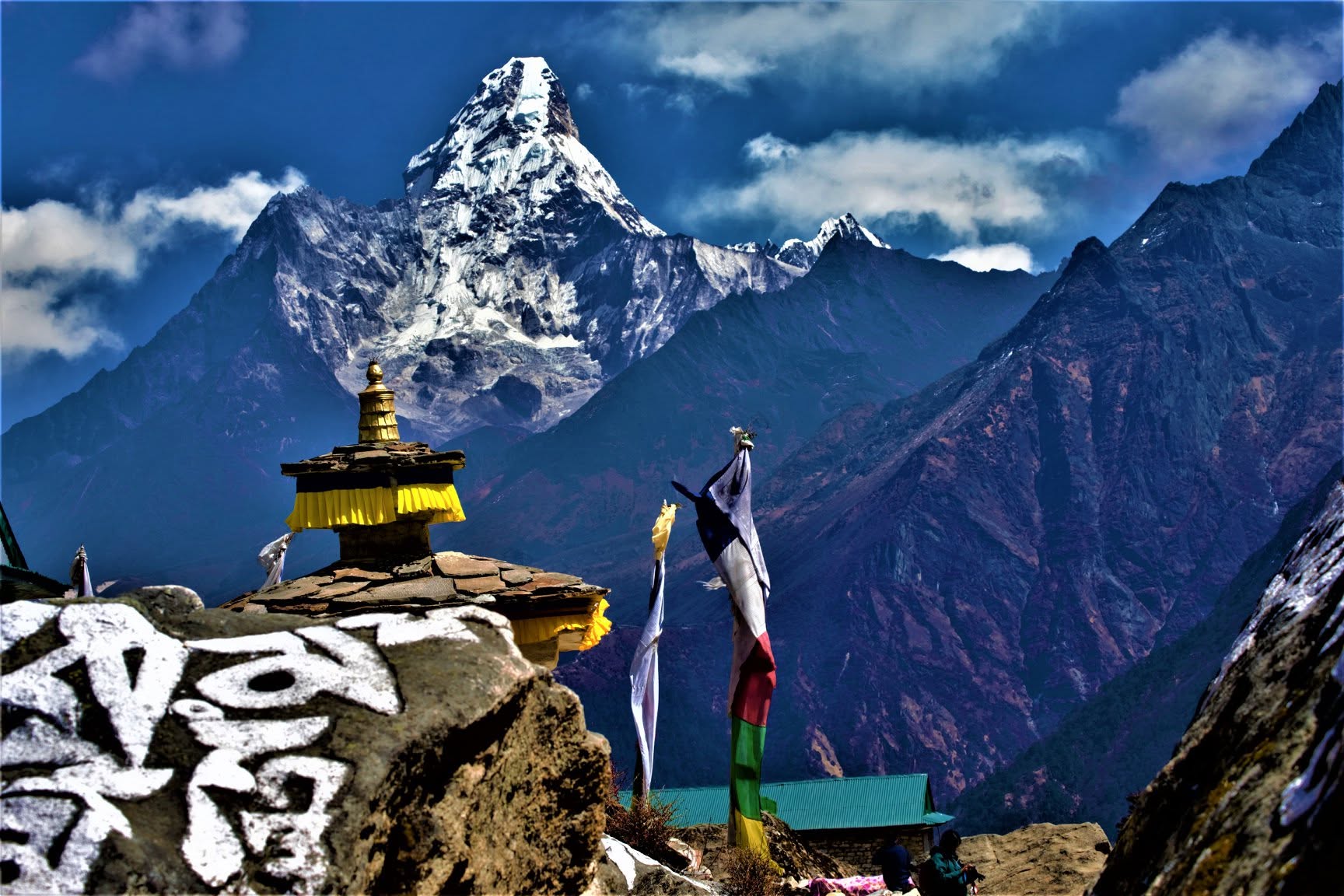
Ama Dablam is, by wide agreement among Himalayan climbers, the most beautiful mountain in Nepal. Its name means Mother's Necklace, a reference to the hanging glacier on its south-west face that resembles the traditional Dablam pendant worn by Sherpa women, flanked by ridgelines that fall away like the folds of a mother's arms. Rising to 6,812 meters above the village of Pangboche in the Khumbu region, it stands apart from every other trekking or expedition peak in Nepal for the sheer elegance of its shape and the seriousness of the climbing required to reach its summit. This is graded TD (Tres Difficile) in the French alpine system, the same grading used for the most demanding routes in the Alps, and it is a genuine mountaineering expedition rather than a trekking peak.
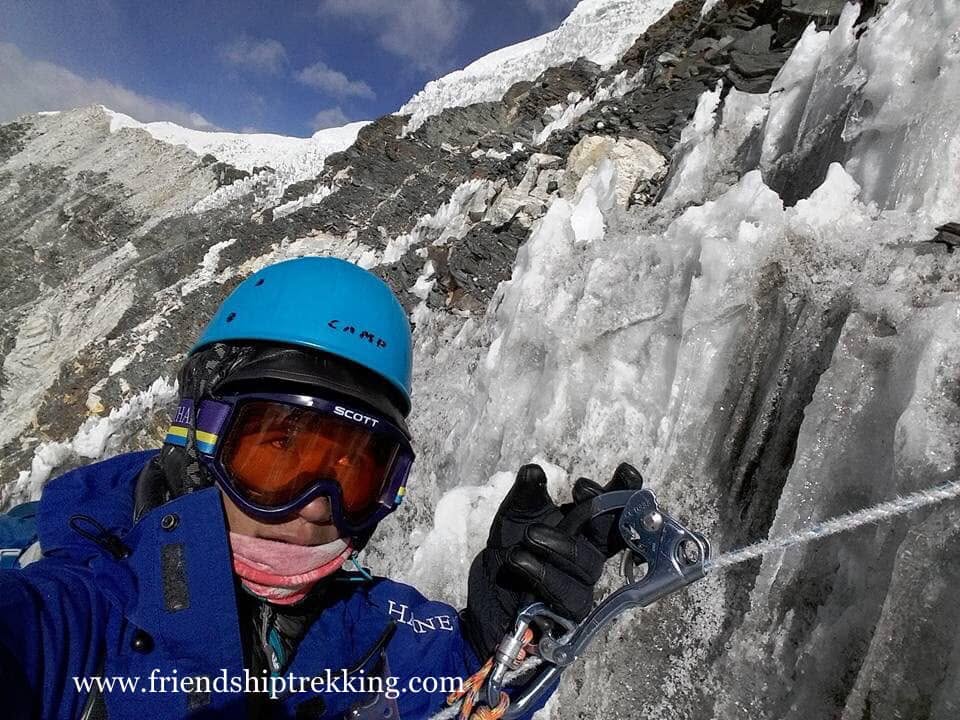
The standard route follows the south-west ridge, first climbed in 1961 by a New Zealand and American team including Barry Bishop, Mike Gill, Wally Romanes, and Barry Corbet. From Base Camp at 4,600 meters the route climbs through Camp 1 on the broad lower ridge, up steep granite slabs and corners rated up to 5.7 in places, to Camp 2 perched on a narrow, exposed shoulder. Above Camp 2, the route crosses the famous Yellow Tower and Grey Tower before reaching Camp 3, set directly beneath the Dablam, the hanging serac that gives the mountain its name. From Camp 3 the final push to the summit crosses a steep snow and ice face before a short, spectacular summit ridge. Fixed ropes are used extensively on the upper mountain and a full rotation schedule with two acclimatization cycles through the camps is essential before the summit attempt.
The approach to Base Camp follows the same trail used by Everest Base Camp trekkers as far as Pangboche, through Namche Bazaar and the monastery at Tengboche, before turning off toward the foot of Ama Dablam itself. This expedition is built for experienced climbers with prior technical alpine or Himalayan climbing background who are ready for sustained rock, ice, and snow climbing at altitude, supported throughout by our climbing Sherpa team, fixed rope installation on the standard route, and a full camp and kitchen crew at Base Camp.
Trip Details
Duration: 31 Days
Summit Altitude: 6,812 m (Ama Dablam)
Base Camp Altitude: 4,600 m
Camp 1 Altitude: 5,700 m
Camp 2 Altitude: 5,950 m
Camp 3 Altitude: 6,300 m
Climbing Grade: TD (Tres Difficile), Alpine Grade with rock, ice, and snow climbing
Difficulty Level: Strenuous, Technical Expedition
Route: South-West Ridge
Best Season: October to November and April to May
Start and End Point: Kathmandu
Expedition Style: Full-Service Expedition with Fixed Rope and Base Camp Support
Expedition Region: Khumbu, Solukhumbu District
Major Highlights
- Summit of the Most Beautiful Mountain in Nepal: Standing on the summit of Ama Dablam at 6,812 meters, above the hanging Dablam glacier and the razor-edged south-west ridge, is one of the most celebrated achievements available to any technical climber in the Himalaya.
- A Genuine Technical Alpine Route: The climb from Camp 1 to Camp 3 involves sustained rock climbing up to 5.7, steep snow and ice, and the famous Yellow Tower and Grey Tower, making Ama Dablam one of the most complete and rewarding technical routes on any 6,000- or 7,000-meter peaks in the world.
- The Khumbu Approach through Namche and Tengboche: The trek to Base Camp follows the classic Everest region trail through Namche Bazaar and the Tengboche Monastery, with Ama Dablam itself visible for days as a constant, growing presence above the trail, building anticipation long before you reach its foot.
Brief Itinerary
| Day | Route | Elevation | Overnight |
| 1 | Arrival in Kathmandu | 1,400 m | Kathmandu |
| 2 | Briefing and Expedition Preparation in Kathmandu | 1,400 m | Kathmandu |
| 3 | Fly to Lukla, Trek to Phakding | 2,610 m | Phakding |
| 4 | Phakding to Namche Bazaar | 3,440 m | Namche Bazaar |
| 5 | Acclimatization Day in Namche Bazaar | 3,440 m | Namche Bazaar |
| 6 | Namche Bazaar to Tengboche | 3,860 m | Tengboche |
| 7 | Tengboche to Pangboche | 3,900 m | Pangboche |
| 8 | Pangboche to Ama Dablam Base Camp | 4,600 m | Base Camp |
| 9 | Acclimatization and Rest Day at Base Camp | 4,600 m | Base Camp |
| 10 | Puja Ceremony and Climbing Equipment Preparation | 4,600 m | Base Camp |
| 11 | Rotation 1: Climb to Camp 1 | 5,700 m | Camp 1 |
| 12 | Camp 1 to Camp 2, Descend to Base Camp | 5,950 m / 4,600 m | Base Camp |
| 13 | Rest Day at Base Camp | 4,600 m | Base Camp |
| 14 | Rotation 2: Climb to Camp 1 | 5,700 m | Camp 1 |
| 15 | Camp 1 to Camp 2 | 5,950 m | Camp 2 |
| 16 | Camp 2 to Camp 3, Descend to Base Camp | 6,300 m / 4,600 m | Base Camp |
| 17 | Rest and Weather Window Wait at Base Camp | 4,600 m | Base Camp |
| 18 | Reserve Day at Base Camp | 4,600 m | Base Camp |
| 19 | Reserve Day at Base Camp | 4,600 m | Base Camp |
| 20 | Summit Push Begins: Base Camp to Camp 1 | 5,700 m | Camp 1 |
| 21 | Camp 1 to Camp 2 | 5,950 m | Camp 2 |
| 22 | Camp 2 to Camp 3 | 6,300 m | Camp 3 |
| 23 | Summit Day: Camp 3 to Summit, Descend to Camp 2 | 6,812 m / 5,950 m | Camp 2 |
| 24 | Camp 2 to Base Camp | 4,600 m | Base Camp |
| 25 | Reserve Summit Day (Contingency) | 4,600 m | Base Camp |
| 26 | Trek Base Camp to Tengboche | 3,860 m | Tengboche |
| 27 | Trek Tengboche to Namche Bazaar | 3,440 m | Namche Bazaar |
| 28 | Trek Namche Bazaar to Lukla | 2,860 m | Lukla |
| 29 | Fly Lukla to Kathmandu | 1,400 m | Kathmandu |
| 30 | Contingency or Free Day in Kathmandu | 1,400 m | Kathmandu |
| 31 | International Departure | 1,400 m | - |
Detailed Itinerary
Day 1: Arrival in Kathmandu (1,400 m)
Our team meets you at Tribhuvan International Airport and transfers you to your hotel in Thamel. Ama Dablam is a serious technical expedition, and the days ahead will be long, so use this evening to rest and settle in.
Day 2: Briefing and Expedition Preparation in Kathmandu (1,400 m)
A full expedition briefing at the Friendship Trekking office covers the south-west ridge route in detail, the rotation and acclimatization plan, and the technical sections you will encounter between Camp 1 and Camp 3. Your expedition leader reviews your climbing background and personal equipment. Permits and all logistics are finalized today.
Day 3: Fly to Lukla, Trek to Phakding (2,610 m)
The short, scenic flight to Lukla is followed by an easy three to four hours walk down the Dudh Koshi valley to Phakding, through pine forest and over suspension bridges strung with prayer flags. A gentle start to a long expedition.
Day 4: Phakding to Namche Bazaar (3,440 m)
The trail enters Sagarmatha National Park at Monjo and climbs steadily beside the Dudh Koshi before a long, steep final ascent to Namche Bazaar. As you crest the last ridge, Everest appears above the skyline for the first time, framed by Nuptse and Lhotse.
Day 5: Acclimatization Day in Namche Bazaar (3,440 m)
A hike up to the Everest View Hotel ridge at around 3,880 meters gives your first proper look at Ama Dablam alongside Everest, Lhotse, and Thamserku. The afternoon is free to explore Namche's market and the Sherpa Culture Museum.
Day 6: Namche Bazaar to Tengboche (3,860 m)
A spectacular ridge walk with continuous mountain views leads to the Tengboche Monastery, the spiritual heart of the Khumbu, perched on a hilltop with Ama Dablam rising directly behind it in one of the most photographed views in the Himalaya. If timing allows, the evening prayer ceremony is well worth attending.
Day 7: Tengboche to Pangboche (3,900 m)
The trail descends through rhododendron forest to Deboche and crosses the Imja Khola before climbing to Pangboche, home to the oldest monastery in the Khumbu. Ama Dablam now dominates the sky directly to the south, close enough to make out the detail of the ridge you will soon be climbing.
Day 8: Pangboche to Ama Dablam Base Camp (4,600 m)
A shorter day climbing out of the Imja Khola valley to Base Camp, set on a broad grassy shelf directly beneath the mountain's south-west ridge. This is home for the coming weeks, with a fully equipped kitchen and dining tent, sleeping tents, and a clear, close view of the entire climbing route above.
Day 9: Acclimatization and Rest Day at Base Camp (4,600 m)
A full rest day to settle into life at Base Camp and allow the body to adjust after the trek in. Your expedition leader reviews the climbing plan in detail against the route as it is visible from camp.
Day 10: Puja Ceremony and Climbing Equipment Preparation (4,600 m)
A Buddhist lama conducts a puja ceremony at Base Camp, an essential ritual asking the mountain for safe passage, attended by the full climbing and Sherpa team. In the afternoon, all technical equipment is checked, harnesses and jumars fitted, and the fixed rope plan for the lower mountain reviewed.
Day 11: Rotation 1: Climb to Camp 1 (5,700 m)
The first rotation onto the mountain. The route climbs the broad lower ridge above Base Camp on a mixture of rock and scree with some fixed rope, reaching Camp 1 on a relatively open shoulder with sweeping views back down the Imja valley.
Day 12: Camp 1 to Camp 2, Descend to Base Camp (5,950 m / 4,600 m)
Above Camp 1 the climbing becomes noticeably more technical, on steep granite slabs and corners with sections of fixed rope. Camp 2 sits on a narrow, exposed perch below the Yellow Tower. After touching Camp 2 for acclimatization, the team descends all the way back to Base Camp to recover.
Day 13: Rest Day at Base Camp (4,600 m)
A full rest day at Base Camp. Good food, hydration, and sleep after the first rotation are essential to prepare the body for the second, higher rotation.
Day 14: Rotation 2: Climb to Camp 1 (5,700 m)
The second rotation begins with a now-familiar climb to Camp 1, noticeably easier than the first time as the body continues to adapt to the altitude and the technical terrain.
Day 15: Camp 1 to Camp 2 (5,950 m)
The climb through the technical granite sections to Camp 2 for an overnight stay, a key step in the acclimatization plan before pushing higher toward Camp 3 the following day.
Day 16: Camp 2 to Camp 3, Descend to Base Camp (6,300 m / 4,600 m)
Above Camp 2 the route crosses the Grey Tower and climbs onto the steep snow and ice slopes directly beneath the Dablam, the hanging serac that gives the mountain its name. After reaching Camp 3 for acclimatization, the team descends the full route back to Base Camp for an extended rest before the summit push.
Day 17: Rest and Weather Window Wait at Base Camp (4,600 m)
With both acclimatization rotations complete, the team rests fully at Base Camp while your expedition leader monitors detailed mountain weather forecasts to identify the best window for the summit attempt.
Day 18: Reserve Day at Base Camp (4,600 m)
A buffer day built into the schedule to allow flexibility around the weather window. Rest, eat well, and stay hydrated.
Day 19: Reserve Day at Base Camp (4,600 m)
A second buffer day. Ama Dablam summit attempts depend entirely on stable weather across three days, and this reserve time gives the expedition the best possible chance of a safe and successful summit push.
Day 20: Summit Push Begins: Base Camp to Camp 1 (5,700 m)
With a good weather window confirmed, the summit push begins. The climb to Camp 1 now feels efficient and familiar after two full rotations on the route.
Day 21: Camp 1 to Camp 2 (5,950 m)
A steady climb through the technical rock sections to Camp 2, moving with the accumulated experience and fitness built over the previous rotations.
Day 22: Camp 2 to Camp 3 (6,300 m)
The crux day of the ascent, crossing the Yellow Tower and Grey Tower and climbing the steep snow and ice beneath the Dablam to reach Camp 3, a small, exposed tent platform directly under the summit pyramid.
Day 23: Summit Day: Camp 3 to Summit, Descend to Camp 2 (6,812 m / 5,950 m)
An alpine start well before dawn for the final push. The route climbs a steep snow and ice face before a short, spectacular summit ridge with huge exposure on both sides. Standing on the summit of Ama Dablam at 6,812 meters, with Everest, Lhotse, and the entire Khumbu spread below, is a moment very few climbers ever experience. The descent to Camp 2 the same day is long and demands full concentration even after the exhaustion of the summit push.
Day 24: Camp 2 to Base Camp (4,600 m)
The full descent through Camp 1 and down the lower ridge to Base Camp, where a celebration awaits with the entire support team. This is one of the best-earned rest nights of any expedition in the Himalaya.
Day 25: Reserve Summit Day (Contingency) (4,600 m)
A final reserve day held in the schedule in case the primary summit attempt was delayed by weather. If the summit was successful, this is a relaxed recovery day at Base Camp.
Day 26: Trek Base Camp to Tengboche (3,860 m)
The trek out begins, retracing the trail through Pangboche and down to Tengboche. The pace on the descent is easy and the mood among the team is celebratory.
Day 27: Trek Tengboche to Namche Bazaar (3,440 m)
A pleasant descent back through the forest to Namche Bazaar, with a final look back at Ama Dablam from a distance that finally reveals the whole shape of the route you climbed.
Day 28: Trek Namche Bazaar to Lukla (2,860 m)
The final full trekking day, back through the Dudh Koshi valley to Lukla. Tonight's celebration among guides, Sherpas, and climbers is one of the most memorable evenings of the entire expedition.
Day 29: Fly Lukla to Kathmandu (1,400 m)
The morning flight back to Kathmandu returns you from the mountain world to the noise and color of the city. A proper shower and a real bed are well earned.
Day 30: Contingency or Free Day in Kathmandu (1,400 m)
A buffer day built in for any Lukla flight delays. If all has gone to plan, this is a free day for shopping, sightseeing, or simply resting before a farewell dinner with the Friendship Trekking team in the evening.
Day 31: International Departure (1,400 m)
Transfer to Tribhuvan International Airport for your flight home. Thank you for climbing Ama Dablam with Friendship Trekking. Very few climbers reach this summit, and fewer still forget what it looked like from the top.
Ama-Dablam Expedition
.jpg)




.png)
